AILSA FORRESTER
  • PORTFOLIO
  • PROJECTS
    • UX DESIGN
    • ILLU6050 FINAL SUBMISSION
  • PERSONAL WORK
  • ABOUT ME

THE GRAPHIC CODE OF COMICS

2/25/2021

0 Comments

 
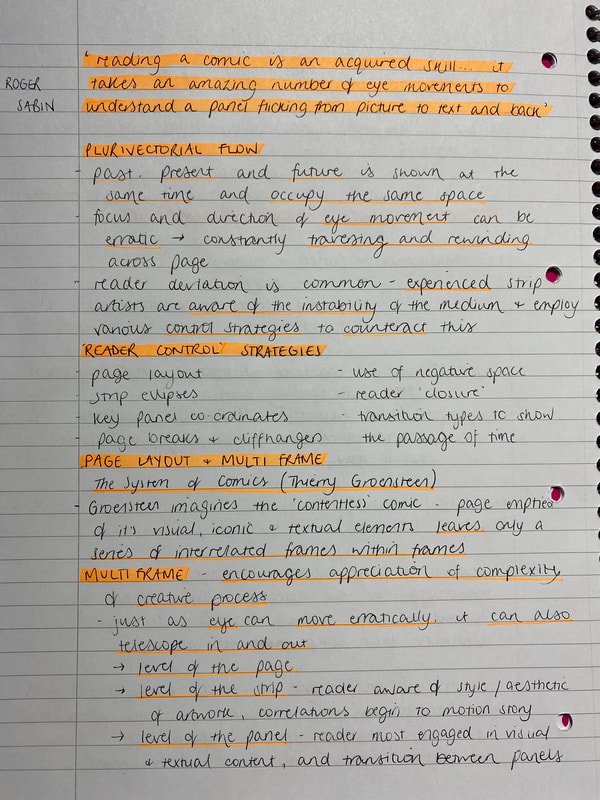
Today's lecture with Nick revolved around the analysis of comics, and the theoretical elements behind the construction of each page. It was a fascinating lecture, particularly learning about Scott McCloud's 'transition' types which I will discuss below. 
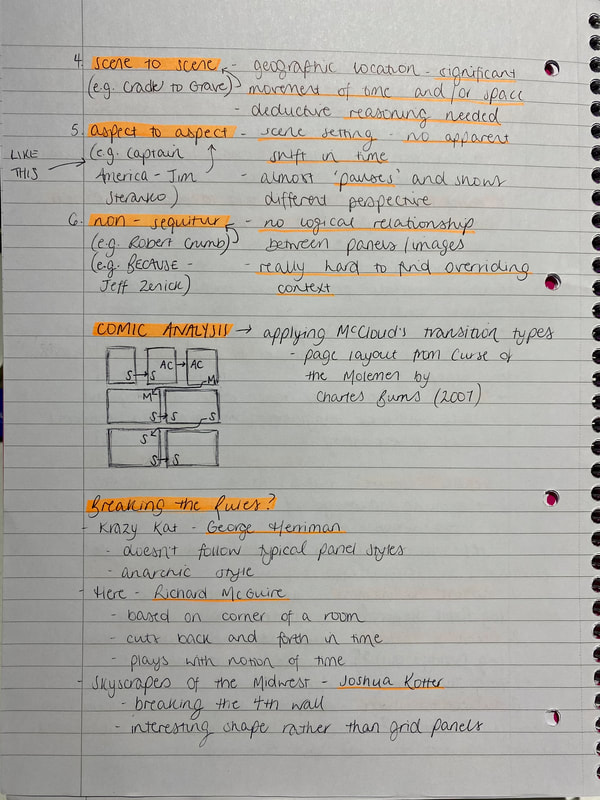
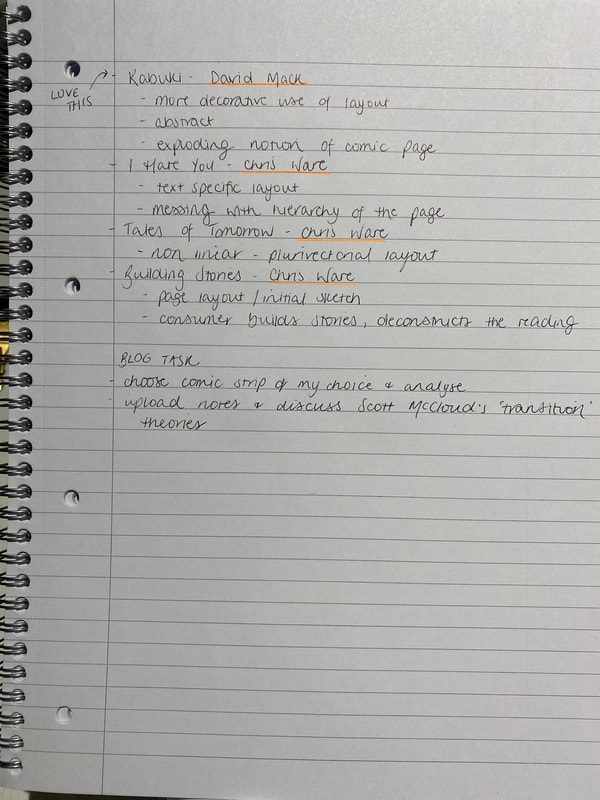
Scott McCloud's panel transition types can be used to describe the progression of panels within comics. The types are: (explanation of each can be found in my notes attached)
1. moment to moment
2. action to action
3. subject to subject

4. scene to scene
5. aspect to aspect
6. non-sequitur
​ ​
Analysis task:
Picture
I will analyse this comic page by Frank Miller for this week's task. There is lots of text within the panels on this page (giving this quite a word specific anchorage), allowing the panels to easily transition, along with dynamic panel imagery to coincide. There is a heavy use of speech bubbles, helping with the narrative of the story, and also lots of sound effects (onomatopoeia) which are often useful for viewer engagement. The page is entirely black and white and I really like the contrast and dynamism this provides, as well as the dynamic viewpoints Miller has used here. He has used the traditional 9 panel grid layout here (top 3 merged), providing consistency for the reader. Also this emphasises a steady pace of time and action etc.
Following McCloud's panel transition theory, I would suggest they ran: subject-subject, subject-subject, action-action, action-action, subject-subject, action-action.
Picture
Picture
Picture
Picture
Picture
0 Comments


Leave a Reply.

    Archives

    May 2021
    April 2021
    March 2021
    February 2021

    RSS Feed

Site powered by Weebly. Managed by 34SP.com
  • PORTFOLIO
  • PROJECTS
    • UX DESIGN
    • ILLU6050 FINAL SUBMISSION
  • PERSONAL WORK
  • ABOUT ME